

What is Dark Heart Nursery? Here is what aspiring growers should know.
What is Dark Heart Nursery? Here is what aspiring growers should know.
It’s no secret that the cannabis industry is booming, in fact, dispensaries in some states were deemed essential businesses amid the coronavirus crisis.
According to a 2019 Los Angeles Times report, there are over 600 cannabis stores operating legally in California alone, a number that is anticipated to grow exponentially. But where does all that weed come from? The short answer is that it comes from hundreds of cultivators, many of which are located in Northern California’s Emerald Triangle. It’s estimated that 60% or more of all cannabis consumed in the U.S. is grown in the triangle, made up of Humboldt, Mendocino, and Trinity counties.
And how exactly do those cultivators grow all of that weed? There are two ways to go about producing cannabis: you can grow from seed, known as sexual reproduction, or you can reproduce through cloning, known as asexual reproduction. While cloning cannabis might sound like something out of a science fiction novel, it’s a highly effective way to cultivate — just ask Dark Heart Nursery, one of California’s leading retailers for premium cannabis clones.
Dark Heart Nursery has become a go-to resource of quality clones for growers across California. Many of the most popular and emerging genetics utilized by growers come from Dark Heart’s stock.
How clones are created at Dark Heart Nursery
Founded in 2007, Dark Heart Nursery specializes in cultivating clones that will perform well in a variety of settings for growers large and small. According to a Dark Heart representative, the nursery produces about 2 million plants each year in a number of configurations.
Before we go in-depth about how clones are made, it’s important to cover the basics. A clone is a plant cutting that is genetically identical to the plant it was taken from, known as the mother. Cloning allows cultivators to create exact replicas of their best plants rather than growing brand new plants from seed.
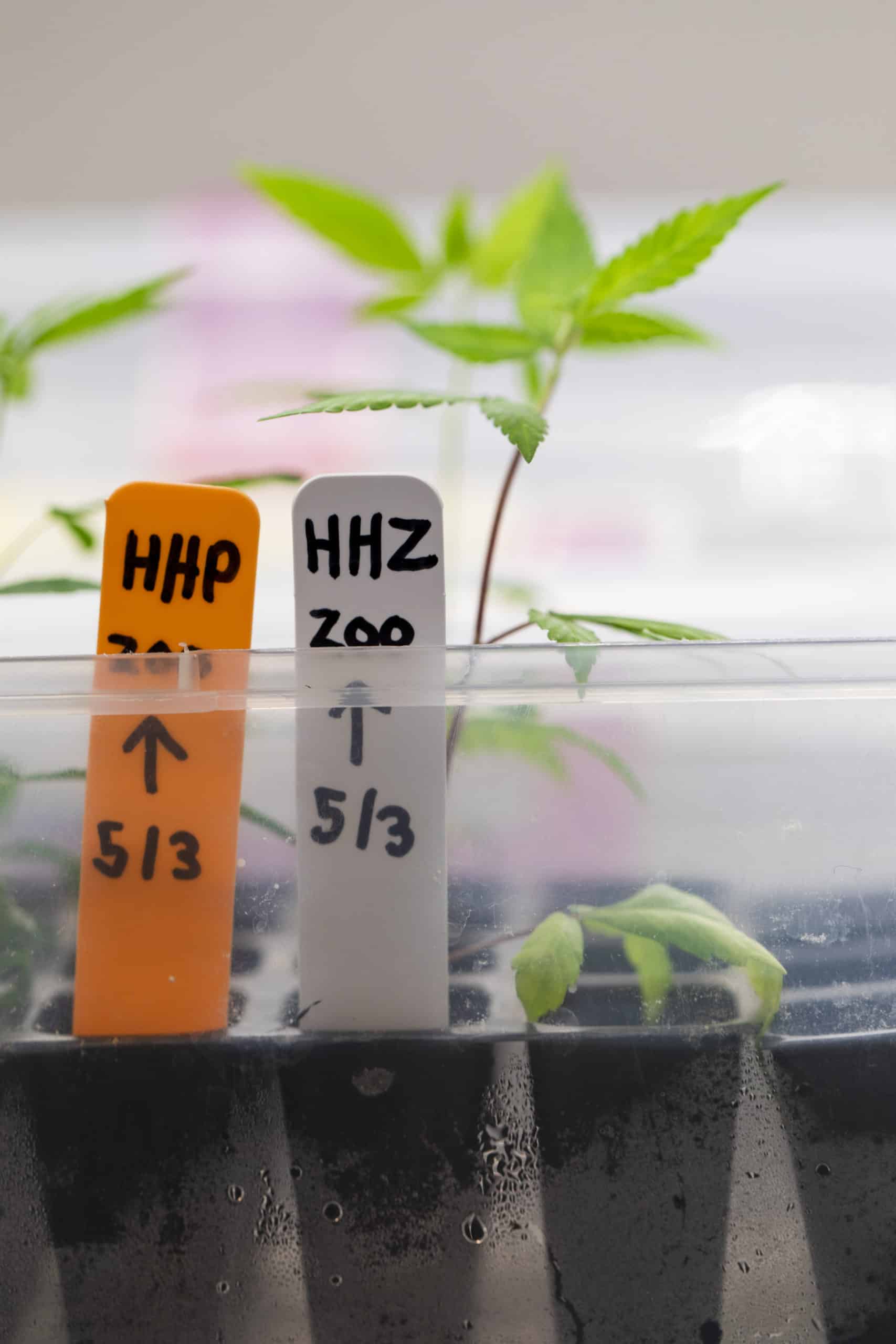
The steps of the cloning process seem simple, though it requires several skilled pros in order to execute properly. “You take a cutting from a healthy mother plant, remove excess foliage, place the clone in a rooting medium, and keep it under 24 hour light to allow the cutting to grow roots,” the DH rep said. A number of tools are also required, they added, including cutting tools to take a clone from the mother plant, a cloning medium such as rockwool, and lights to keep clones in a vegetative state.
Though Dark Heart is known for their high-quality clones, they provide a few options for plant configurations with different benefits for growers:
- Clones are available in two sizes: heartlets (4.5 inches) and premiums (6 inches). Because clones are an exact genetic copy of a mother plant, growers know what to expect in terms of growth and flower characteristics such as cannabinoid profile and flavor. Clones are especially useful for indoor growers utilizing high-turnover crops to meet demand for specific strains. Clones are also useful to hobby growers that plant each spring.
- Feminized Seedlings are plants that are grown from seeds that have been “feminized.” This means that the breeder used a process called “feminization” to create seeds that are 99.5% female. These seedlings are an excellent option for field growers and large scale outdoor cultivators.
- The Easy Pot is a product designed for beginner and first time hobby growers. It is an “autoflower” plant, which means it will flower as it ages, regardless of the light cycle. They will start flowering shortly after you bring them home and will be ready to harvest in around 40-60 days. Autoflowers are known to be hardier and less finicky than regular cannabis plants, which makes them perfect for beginner growers.
Shopping for clones? Here’s what you should know
Like shopping for any cannabis products, you should conduct some research before purchasing clones. Our Dark Heart rep recommends always buying from reputable, licensed nurseries or dispensaries with reviews, photos, and detailed information about the varietals they sell. For anyone interested in getting Dark Heart clones, Dark Heart has retail partners throughout all of California.
“Healthy clones are crucial for a successful grow. Growers that plant healthy clones that immediately start growing and thrive will be much better positioned for success. It’s very costly and inefficient to have to nurse sick clones back to health as the grow is supposed to be getting started,” they said.
Additionally, you should look for healthy clones that are a vibrant green color with white roots. Clones that appear veiny or tough looking, have droopy leaves, or yellowing or brown roots should be avoided. While there are lots of factors that affect how much cannabis flower a clone can produce if grown correctly, some cultivars grown outside are capable of producing over 10 pounds of flower per plant.
What are the top strains of 2020?
With over 75 strains in their catalogue, Dark Heart has something for every type of weed grower. The nursery’s top strains of this year are the following:
- Banana Mango: Bred by the Humboldt Seed Company, this strain is known for its huge plants that produce gorgeous sativa flowers laden with mango nectar and banana candy terpenes.
- Tahquitz: This three-way cross was created by Johnny N. at Elev8 Seeds as a special tribute to the legendary strain Panama Red. It is an incredibly unique strain often described as versatile, relaxing and focused.
- Freakshow: Visually stunning to grow, this one-of-a-kind strain has mutated leaves that look more like a fern than weed. Freakshow is known for its uplifting cerebral effects and sandalwood scent. The strain was created by Shapeshifter and has been reproduced by the Humboldt Seed Company.
- Blue Dream: As one of the most popular strains ever, Blue Dream is loved for its great yields and healthy balance of full-body relaxation and mental stimulation. This Haze x Blueberry varietal produces huge, dense buds packed heavily with trichomes, and covered with a fine coat of light orange hairs.
Dark Heart has recently launched their own line of packaged flower and pre-rolls with new strains coming out each quarter. Currently, there are three editions available — Dark Heart Legends, which includes classic strains that have achieved legendary status, Dark Heart Head Stash, featuring new and buzzworthy buds, and Dark Heart Breeder’s Choice, an ultra-premium line of rare flowers hand-selected for their exemplary characteristics.
Exciting things are also on the horizon for Dark Heart’s breeding program, led by Dr. Kay Watt. The program is currently researching and developing innovative new genetics for clone and seed production.
Photos courtesy of Dark Heart Nursery.
Ashlee Nolan
Ashlee Nolan is an NYC-based freelance journalist who enjoys writing about cannabis, culture, and politics. When not writing, you can probably find her curled up on the couch with coffee, a book, and her cat, Wednesday.

Dark Heart Announces Grand Opening of Cannabis Biosciences Facility Half Moon Bay
Dark Heart Announces Grand Opening of Cannabis Biosciences Facility Half Moon Bay
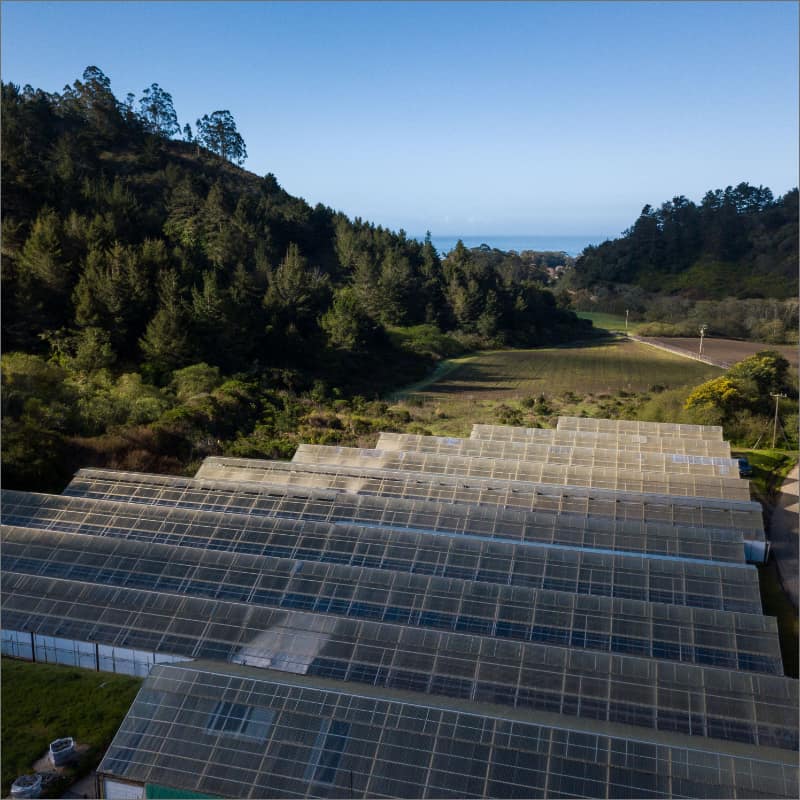
OAKLAND, Calif., Feb. 5, 2020 /PRNewswire/ — Dark Heart Nursery (DHN), a leading California based cannabis genomics, diagnostics and applied biotechnology company, is pleased to announce the opening of their brand new 70,000 sq. ft facility this Spring.
Dark Heart Nursery (DHN), a leading California based cannabis genomics, diagnostics and applied biotechnology company, is pleased to announce the opening of a new 70,000 sq. ft square foot production and research nursery facility in Half Moon Bay, California. Capitalizing on the success of their Oakland California facility, Dark Heart is aggressively investing in plant science. The company’s recent discovery of Hop Latent Viroid in cannabis is driving robust demand for clean plants across California. The Half Moon Bay facility will enable Dark Heart to meet the continued and growing demand for its disease-free, premium genetic material by both retail and commercial customers. Dark Heart was the first company to identify and eradicate the devastating Hop Latent Viroid (HpLVd) pathogen. As a result of increasing awareness of the disease, there is growing demand throughout California for diagnostic / curative services and clean outsourced genetics. The facility will help address that need.
Since its inception over 12 years ago, Dark Heart has gained an unparalleled reputation for its high-quality cannabis plants. Among other achievements, Dark Heart was the first cannabis nursery to incorporate tissue culture technology into its plant production systems, ensuring high-quality clean plants. In recent years they’ve pioneered new value-adding product configurations such as seedlings, and teens. They also offer a broad selection of plants to home growers through retail dispensaries.
“Here at Dark Heart, we strive to support industry & consumer growth and success. As our customers look to grow and diversify their businesses, Dark Heart provides solutions to help customers achieve their goals, bringing new opportunities for us and our customers.” said Dan Grace, CEO. “We are very much looking forward to our new Half Moon Bay production facility which will allow us to more successfully meet the needs of large scale producers throughout California, and allowing us to introduce new product lines to meet the ever-changing needs of California’s cultivation economy. This facility represents a significant milestone in Dark Heart’s core mission to help farmers thrive.”
In addition to its core production capability, the new facility will be home to the company’s emerging plant breeding program, where Dark Heart will produce new standout varieties and seed stock.
The Dark Heart team includes a well-rounded group of scientific professionals, business leaders, horticulturalists and industry veterans who are dedicated to driving Cannabis innovation forward. This facility represents a significant milestone in the team’s core mission to empower farmers to thrive.
About Dark Heart Nursery:
Dark Heart’s mission is to empower growers to thrive by pioneering innovative products and services. Dark Heart is one of California’s oldest and most respected cannabis brands, having garnered a reputation over the past 12 years for their high-quality clones. Headquartered In Oakland, California, the company employs over 60 people at four locations. Dark Heart is focused on research, plant genetics and pathology to ensure its customers are afforded high-quality, pest and disease-free, plants. Dark Heart also offers diagnostic and curative services for the HpLVd viroid and other plant pathogens. For additional information please visit www.darkheartnursery.com.
MEDIA CONTACT:
Elana Cohen
Elana@nisonco.com
847-997-4404
Free Download: Hop Latent Viroid Resource Paper
Free Download: Hop Latent Viroid Resource Paper
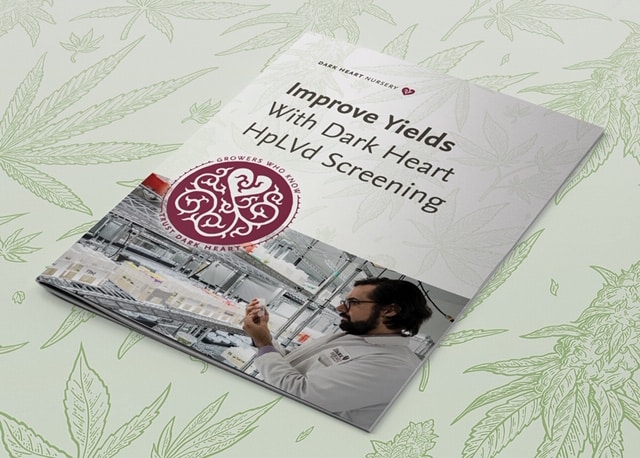
Hop latent viroid (HpLVd) is a contagious pathogen that causes “dudding” in plants. Diseased plants have reduced vigor, yield, and potency. Not all viroid-infected plants show symptoms. Download the free resource paper from Dark Heart and learn how to detect and eradicate HpLVd from your grow.
For information on tissue culture services and viroid testing, please email info@darkheartnursery.com or use the direct order link.

Dark Heart Nursery Identifies New Pathogen, Creates Patent-Pending Process for Testing and Eliminating Cannabis “Dudding”
Dark Heart Nursery Identifies New Pathogen, Creates Patent-Pending Process for Testing and Eliminating Cannabis “Dudding”
OAKLAND, Calif.–(BUSINESS WIRE)–Dark Heart Nursery (DHN) proudly announces that it is the first organization to positively identify hop latent viroid (HpLVd) as the cause of “dudding” in cannabis. Since 2018, DHN has also been successfully testing for and eliminating HpLVd through a patent-pending clean plant process.
“With Dr. Warren at the helm, we are incredibly excited to now offer diagnostic and curative services for HpLVd to licensed cannabis businesses in California, as well as continue our research in identifying and eradicating additional cannabis-infecting pathogens.”
On the heels of this groundbreaking completed research, the company has also announced that project lead Dr. Jeremy Warren has officially joined DHN as Director of Plant Health.
“The positive identification of the HpLVd pathogen and our patent-pending clean plant process to test for and eliminate it represent a significant advance towards keeping cannabis crops healthy and supporting long-term business growth for cultivators,” said Dan Grace, Founder and President of Dark Heart Nursery. “With Dr. Warren at the helm, we are incredibly excited to now offer diagnostic and curative services for HpLVd to licensed cannabis businesses in California, as well as continue our research in identifying and eradicating additional cannabis-infecting pathogens.”
“Dudding” is a colloquial name for a variety of symptoms, which include loss of vigor, stunting, reduction in yield, reduction in potency and changes in morphology. The syndrome was codified in 2017 by Dr. Rick Crum who first coined the phrase “Putative Cannabis Infectious Agent” (PCIA) to describe it. In 2015, Dr. Crum reported that as many as 35 percent of observed plants showed PCIA symptoms.
In 2017, Dark Heart Nursery began working with Dr. Warren to determine the cause of PCIA. Symptomatic and asymptomatic plants were collected, and next generation RNA sequencing was performed to determine a probable cause of the disease. After analysis of the results in November 2017, it was determined that Hop latent viroid (HpLVd) was the most likely candidate pathogen. A genetic test was then developed to aid in differentiating healthy plants from infected plants.
“It is important to note that finding a potential pathogen within a plant was only the first step in determining if the pathogen is indeed causing the disease in question,” said Dr. Warren. “To demonstrate causality, healthy plants were inoculated with an infectious clone of HpLVd to confirm that the developed symptoms were consistent with PCIA. Our team monitored these infected plants, as well as controlled (healthy) plants for three months to track symptom development. After this time, it was apparent that the HpLVd-infected plants were showing symptoms consistent with PCIA, such as yellowing of leaves, malformed leaves and stunted growth. These results confirmed that HpLVd is causing PCIA symptoms in cannabis.”
In 2014, DHN established the cannabis industry’s first tissue culture laboratory. Among other areas of research, this lab has focused on the development of clean plant protocols through which cannabis can be cured of pathogens and cataloged for later use. Under the leadership of Research Manager Will Roberts, the company developed a patent-pending clean process, which is capable of reliably eliminating HpLVd from infected specimens. For the last year, Dr. Warren’s discovery and subsequent diagnostic tests have allowed DHN’s lab team to reliably and demonstrably eliminate HpLVd. To date, 31 varietals have been cured of the disease.
ABOUT DARK HEART NURSERY
Dark Heart Nursery is one of California’s oldest and most respected cannabis nurseries. Based in Oakland, California, the company employs 63 staff members at three locations and focuses on producing ultra-high-quality pest and disease-free plants. Dark Heart Nursery also invests substantially in research, plant genetics and pathology to ensure its customers are always afforded the best chance of success. For more information visit darkheartnursery.com
Dark Heart Nursery is now offering diagnostic and curative services for HpLVd to licensed cannabis businesses throughout California. It is likely that there are other unidentified pathogens which infect cannabis; DHN’s team is available to identify suspect pathogens on a contract basis. DHN’s team is also available for general consulting engagements. Interested parties should contact Melanie Nash at melanie@darkheartnursery.com.
ABOUT DR. JEREMY WARREN
Dr. Jeremy Warren received his B.S. degree in biochemistry from the University of California at Davis in 2000 and his Ph.D. in Plant Pathology from the University of California at Davis in 2015. He pursued postdoctoral research at the University of California at Davis and has over 20 years of experience in the field of plant pathology. He recently accepted a position at Dark Heart Nursery as Director of Plant Health.
ABOUT WILL ROBERTS
Will Roberts has a B.S. in Soil Science from Humboldt State University and a M.S. in Environmental Management from the University of San Francisco. He has over a decade of agricultural research experience and has been with Dark Heart Nursery since 2012, including nearly five years of experience in cannabis tissue culture.
ABOUT HOP LATENT VIROID (HpLVd)
Hop latent viroid (HpLVd) was first characterized in Humulus lupulus (hop) plants (Putcha et al. 1988). The initial research suggested it was a minor pathogen in hops; however, recent research has shown that infection with HpLVd can have a significant impact on yields and secondary metabolite production (Adams et al. 1991, Barbara et al. 1990, Matoušek 1994). These yield and metabolite impacts seem to be even more pronounced in cannabis. If plants are showing symptoms of HpLVd infection, there are a few actions to consider. Always remove infected plants from the growing area to prevent spread. HpLVd, like many viroids, has been shown to be primarily mechanically transmitted, so strong nursery sanitation protocols are necessary when pruning and processing plants. The secondary means of HpLVd transmission are not yet fully understood. However, other viroids in the Cocadviroid genus have been shown to be pollen and seed transmissible. This suggests that HpLVd may also be transmitted in a similar manner, but further study is required. Insect transmission of viroids is also still being studied. Cannabis plants can be carriers for HpLVd without showing any outward symptoms of the disease. For this reason, it is important to test all the plants in a mother block for HpLVd infection and to purchase clean plant materials whenever possible. Although the company’s work did not include any hemp varietals, it is highly likely that HpLVd also impacts that crop.
RESOURCES:
Visual Resources – https://goo.gl/LhE8k1
REFERENCES:
A.N. Adams, D.J. Barbara, A. MortonEffects of hop latent viroid on weight and quality of the cones of the hop cultivar Wye Challenger
Ann. Appl. Biol., 118 (1991), pp. 126-127
D.J. Barbara, A. Morton, A.N. Adams, C.P. GreenSome effects of hop latent viroid on two cultivars of hop (Humulus lupulus) in the UK
Ann. Appl. Biol., 117 (1990), pp. 359-366
J. Matoušek, L. Trnĕná, P. Svoboda, P. RůžkováAnalysis of hop latent viroid (HLVd) in commercial hop clones in Czech Republic
Rostlinná výroba, 40 (1994), pp. 973-983
H. Puchta, K. Ramm, H.L. SängerThe molecular structure of hop latent viroid (HLV), a new viroid occurring world-wide in hops
Nucleic Acids Res., 16 (1988), pp. 4197-4216
Contacts
Dark Heart Nursery – info@darkheartnursery.com
Media Inquiries: Laura Braden Quigley – laura@lbqstrategies.com